Lifestyle/Nutrition
Muffin Top Exercises: 7 Moves That Actually Work


The best way to shrink a muffin top is a mix of cardio, compound strength moves, and core exercises, paired with a calorie deficit. Exercise burns fat throughout your whole body, so these moves work by lowering your overall body fat. If a stubborn pocket stays put after several months of steady effort, you're not alone, and medical treatments may be worth considering.
What Is a Muffin Top?
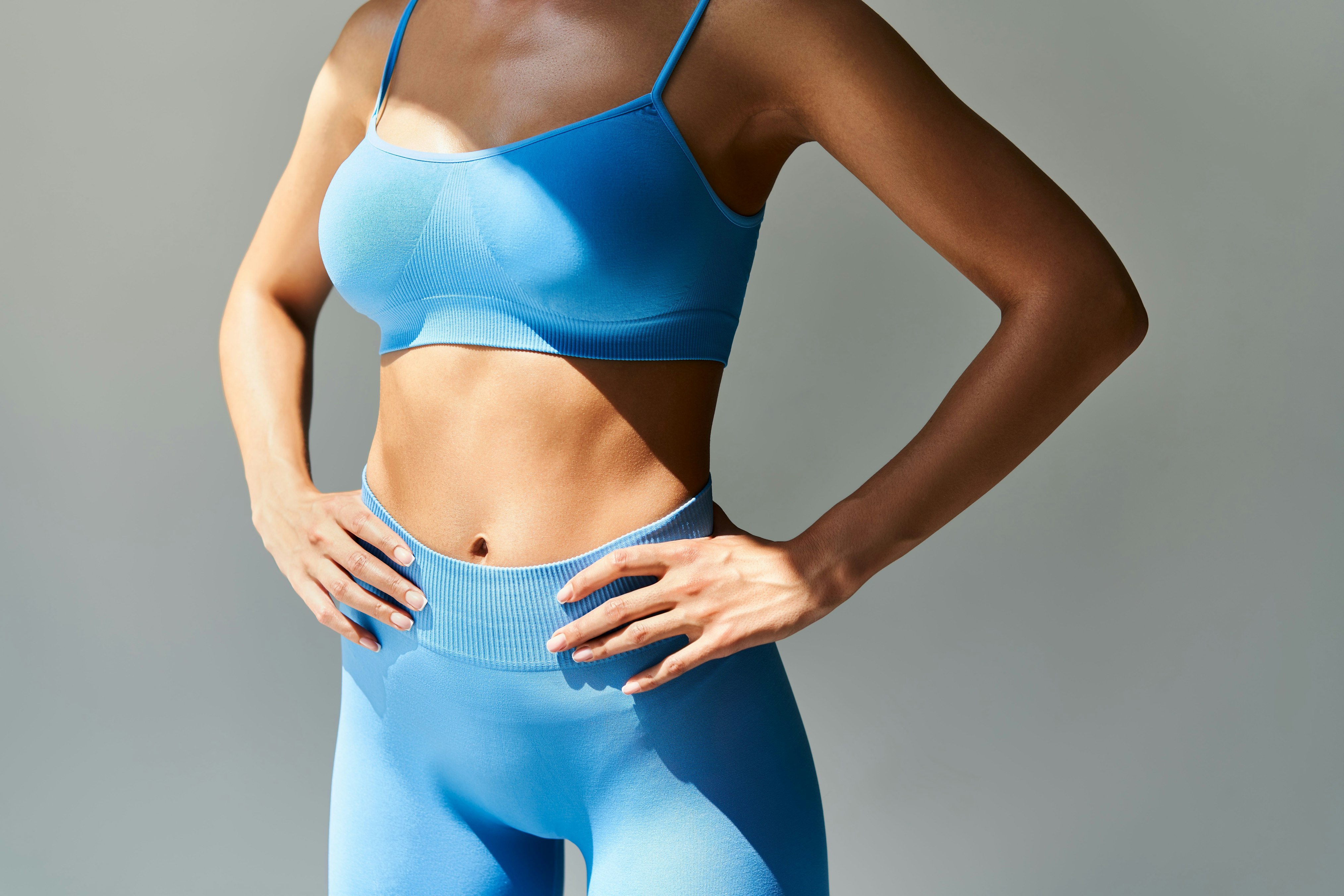
A muffin top is the casual name for fat that builds up around your midsection, right above the hips, and spills over the waistband of your pants. If you have one, you've got plenty of company: nearly 70% of adults deal with excess abdominal fat.
Dr. Kevin Hanz, a board-certified plastic surgeon at our Dallas office, describes it as excess fat that hangs over the lateral hip area, the outer sides of your hips, and it can wrap all the way around the waist. It tends to be quite resistant to diet and exercise, and you'll notice it most in high-waisted pants or a bathing suit. In some cases, loose skin that hasn't tightened back up after weight loss can create the same look.

Muffin Top vs. Love Handles: Are They Beyond the Same Thing?
Muffin top and love handles are often used as synonyms. For some people, love handles means fat on the sides, or flanks, of the abdomen, while muffin top means the spillover around the belly.
Dr. Aaron Rollins, the inventor of AirSculpt® technology, explains that muffin top, lower belly, flank, and spare tire fat all refer to the same area of the lower stomach. This fat often stretches from the front of the abdomen around the sides and back toward the spine. Whatever you call it, it's one of the most notorious places for stubborn fat to form.
For the full breakdown, read Love Handles vs. Muffin Top: Are They the Same Thing?
Understanding Muffin Top Fat: Subcutaneous vs. Visceral
A muffin top is made of subcutaneous fat, one of the two main types of abdominal fat. Knowing the difference helps explain why this area is so stubborn and what each treatment can reach.
Subcutaneous Fat
Subcutaneous fat is the soft, pinchable layer that sits just under your skin. In most people, about 90% of body fat is subcutaneous.
It works as the body's energy storage and insurance against starvation, which is why it's naturally resistant to reduction. It's also less metabolically active than visceral fat, so it burns more slowly. You can learn more in What Is Subcutaneous Fat and Can It Be Reduced at Home?
Visceral Fat
Visceral fat sits deep inside the abdomen and surrounds your internal organs. Too much visceral fat is linked to chronic diseases like heart disease and type 2 diabetes.
When you start losing weight, your body tends to burn visceral fat first. Liposuction can't reach visceral fat, and diet and exercise are the only effective ways to reduce it.
What Causes a Muffin Top?
A muffin top usually comes from a mix of genetics, hormones, and daily habits. For a closer look, see What Causes the Dreaded Muffin Top and Can I Lose It?
Genetics
Your genes largely decide where your body stores fat, and some people naturally store more of it in the midsection. Genetics can also explain why two people with a similar body mass index (BMI), a ratio of weight to height, can carry different amounts of subcutaneous fat.
Hormonal Changes
Hormonal shifts during pregnancy, menopause, and monthly menstrual cycles can make women more likely to store midsection fat. Insulin resistance, when your body doesn't respond well to the hormone insulin, can lead it to store more fat around the middle. Anxiety can also raise cortisol, a stress hormone, which leads to fat building up in the midsection.
Lifestyle Factors
Poor diet, chronic stress, low-quality sleep, sedentary habits, and excessive alcohol all contribute to a muffin top. Regularly eating more calories than you burn is a major driver, since your body stores the extra as fat. The encouraging part is that these are the factors you can change.
Can You Spot-Reduce a Muffin Top?
Spot reduction isn't possible, which means no exercise can burn fat from one specific place, including your belly. Your body stores fat as triglycerides and breaks them into free fatty acids and glycerol to burn for energy, and that fuel can come from anywhere in the body.
Core work still earns its place. Core exercises strengthen your abs, improve posture, and add to your total calorie burn. Stubborn areas are often the last to shrink, so a little pinchable fat that hangs on is entirely normal.
Get the full science in Spot Reducing Fat: Is It Really Possible?
The 7 Best Muffin Top Exercises
These seven moves blend calorie-burning cardio with core training, and they work best alongside strength training and a calorie deficit. If you're new to exercise, recovering from an injury, or managing a health condition, check with your doctor before you start.

High-Intensity Interval Training
HIIT alternates short bursts of intense exercise with easier recovery periods. It raises your heart rate and burns calories efficiently while supporting muscle growth and metabolism. Sprints, burpees, and mountain climbers all count, and it's smart to ease in if you're not already in good shape.
Side Plank with Leg Raise
This move works your obliques, the muscles along the sides of your waist, along with your outer thigh and core stability.
- Lie on your side, propped up on your lower elbow.
- Keep a straight line from your knees to your neck.
- Raise your top leg toward the ceiling with control, then lower it.
- Keep your hips still so your body doesn't rotate.
Spiderman Crunch
Start in a plank, either on your elbows or on your hands with arms extended.
- Bring one knee up toward the same-side elbow, turning your leg out so they meet.
- Return to plank and switch sides.
Aim for 15 to 20 reps per side for two to three sets, and keep your knees on the ground for an easier version.
Single-Leg Toe Touches
These strengthen your hamstrings, glutes, and core while improving stability and balance.
- Stand on one leg with a slight bend in the knee.
- Hinge at the waist and reach toward the ground as you lift the other leg behind you.
- Return to standing and repeat.
Once bodyweight feels easy, you can progress to weighted Romanian deadlifts or single-leg deadlifts.
Twisting Mountain Climbers
These mainly target your obliques while burning calories quickly and toning your whole core.
- Start in a plank with your arms extended but not locked.
- Bring one knee toward the opposite elbow, then quickly return it.
- Switch sides.
Do 10 to 15 reps per side for two to three sets.
High Knees
High knees are a higher-intensity cardio move that strengthens your hip flexors and quads while boosting speed.
- Stand with your feet hip-width apart.
- Run in place, driving alternating knees toward your chest.
- Keep your abs engaged and let your arms swing naturally.
They also make a good warm-up before sprints.
Leg Raises
Leg raises help build lower abdominal strength.
- Lie on your back with your legs straight and shoulders flat.
- Breathe in and lift one leg with control while tightening your abs.
- Lower it and switch legs, keeping your neck relaxed.
Why Compound Exercises Matter Too
Compound exercises, which work several muscle groups at once, are a key part of losing a muffin top. Include upper-body pushes and pulls like shoulder presses, pull-ups, push-ups, and rows, plus lower-body moves like squats and deadlifts.
Building muscle can also raise your basal metabolic rate, the number of calories your body burns at rest. Whatever you're lifting, keep your core tight.
How to Structure a Weekly Routine
Start with two or three workouts a week and build up gradually. Keep roughly 80 percent of your activity at an easy pace and add about one harder session each week if you're able. Rest days are essential, especially if you strength train regularly.
Here's one sample week you can adjust to your fitness level:
- Day 1: Full-body strength (squats, rows, push-ups) plus side planks and leg raises
- Day 2: Easy walk, jog, or bike ride
- Day 3: Rest
- Day 4: Harder session with high knees, twisting mountain climbers, and Spiderman crunches
- Day 5: Easy cardio
- Day 6: Full-body strength plus single-leg toe touches
- Day 7: Rest
Walking is a great, underrated form of cardio for your easy days. A professional trainer can help tailor a plan to your body and goals.
Nutrition Guidelines for Muffin Top Reduction
Nutrition creates the calorie deficit you need for fat loss, which is why exercise alone usually won't erase a muffin top. A common target is about 300 to 500 calories below your maintenance level, and a food-tracking app can help at first.
- Protein: Aim for about one gram per pound of lean body mass to help preserve muscle while you lose fat.
- Carbs: Choose complex carbs like vegetables, fruits, whole grains, and legumes, and limit refined sugars and processed foods.
- Fats: Get about 20 to 30 percent of your calories from healthy fats like avocados, nuts, olive oil, and fish.
- Hydration: Drink water throughout the day, since the body sometimes mistakes thirst for hunger.
A steady, modest deficit sets you up for more sustainable results than a crash diet. If you have a medical condition, check with your doctor before changing how you eat.
Lifestyle Changes That Support Fat Loss
Sleeping well and managing stress can help lower cortisol, a hormone that causes your body to store excess fat.
Sleep
Poor sleep disrupts hunger hormones and increases cravings for high-calorie foods. Sleeping seven to eight hours helps reduce hunger and supports recovery after workouts. Keep consistent sleep and wake times, get sunlight in your eyes soon after waking, and avoid caffeine late in the day.
Stress Management
Chronic stress raises cortisol levels, which promotes fat storage in the midsection. Meditation, movement breaks during the workday, and setting boundaries can all help.
Hormonal Balance
If you notice hormonal fluctuations, a healthcare provider can help monitor your menstrual cycle patterns and suggest ways to support hormone balance.
How Long Does It Take to Lose a Muffin Top?
There's no single timeline, and losing fat through diet and exercise takes patience and consistency. A deficit of about 3,500 calories equals roughly one pound of fat, so eating about 500 fewer calories than your body needs each day works out to around a pound a week.
Stubborn areas like a muffin top are usually the last to shrink. Progress photos and a smart scale can help you spot gradual changes along the way.
When Exercise and Lifestyle Changes Aren't Enough
If you've kept up a healthy lifestyle for several months and stubborn fat won't budge, medical treatments may be worth considering. These treatments target pockets of fat and aren't designed for overall weight loss, so they tend to work best for people at or near their ideal weight. The right option depends on whether your muffin top comes from excess fat, loose skin, or both.
Nonsurgical Options
Nonsurgical treatments use methods like cooling, heat, or electromagnetic muscle stimulation, often over several sessions, and results tend to be more subtle than surgery. Cryolipolysis, a cooling treatment, reduces fat in a treated bulge by about 20 percent on average as the body clears the injured fat cells over four to six months. Weight gain, aging, or pregnancy afterward can negatively affect results.
People who are pregnant or breastfeeding shouldn't have nonsurgical fat reduction. People with certain cold-related conditions, such as cryoglobulinemia or cold urticaria, shouldn't have cryolipolysis.
Waist Liposuction
Waist liposuction removes fat from the sides of the waistline by inserting a thin tube called a cannula through several small incisions. Traditional liposuction is usually performed under general anesthesia and can deliver noticeable results in one treatment, with downtime that can last several weeks.
Recovery often includes a compression garment for six to eight weeks, and possible risks include numbness, infection, and scars at the incision sites. Exercise and strenuous activity are restricted while you recover from waist liposuction, so your surgeon will tell you when it's okay to return.
Tummy Tuck
A tummy tuck, or abdominoplasty, removes excess fat and skin while tightening the underlying abdominal muscles. If your abdominal muscles have separated, a condition called diastasis recti, the surgeon can reconnect them with sutures for better core support.
Ideal candidates are usually within 20% of their ideal body weight, and a tummy tuck can't address fat around the internal organs. Risks include bruising, swelling, scarring, infection, and blood or fluid collecting under the skin.
Body Lift
A body lift may be the best fit when loose, sagging skin is the main cause of your muffin top, which is common after significant weight loss. It involves surgically removing excess skin and pulling the remaining skin taut for a smoother midsection. A lower body lift can correct sagging of the abdomen, buttocks, groin, and outer thighs.
How AirSculpt® Targets Muffin Top Fat
Waist AirSculpt® specifically targets the waistline, where stubborn muffin top fat forms. It can treat the waistline, hips, love handles, and stomach. The procedure is minimally invasive, and you stay wide awake without general anesthesia.
Here's how it works:
- Numbing: A device called the AirPen uses pressurized air to apply topical anesthesia.
- Entry point: Your surgeon uses a biopsy punch to make a two-millimeter opening, then delivers local anesthetic through it.
- Fat removal: Patented AirSculpt technology vibrates back and forth rapidly, so your surgeon can pluck fat cells one by one, a bit like plucking grapes off a vine.
- Healing: The small opening heals on its own and typically leaves a freckle-sized mark.
Most patients return to normal activities within 24 to 48 hours. The fat cells we remove don't regenerate, though the fat cells that remain can still expand if you gain weight.
We don't have a BMI requirement, though AirSculpt tends to work best for people at or near their ideal weight with localized fat that hasn't responded to diet and exercise. It's a contouring procedure and isn't meant to serve as a weight loss solution.
Possible side effects include bruising, swelling, pain, and scarring. Numbness, itchiness, skin irritation, and a small risk of infection are also possible.
Strenuous exercise isn't allowed right after AirSculpt. On our stomach recovery timeline, patients walk at least 30 minutes daily starting the first day. Once your surgeon clears you, regular exercise and most workouts can be resumed about two weeks. A healthy diet helps minimize weight gain after the procedure.
If loose skin is part of your muffin top, AirTite is designed to tighten loose, sagging skin around the waistline. For more significant excess skin in the lower belly, the Tiny Tuck™ is our mini tummy tuck, performed under local anesthesia with smaller incisions while you stay awake. Consulting a board-certified plastic surgeon is the best way to determine which procedure, or combination, may be right for you.
Muffin Top FAQs
How do you get rid of a muffin top?
You get rid of a muffin top by lowering your overall body fat with a calorie deficit, cardio, compound strength training, and core exercises. Fat loss happens gradually across your whole body, so your midsection slims down along with everything else. Good sleep and stress management help too. If a stubborn pocket remains after several months of steady effort, medical treatments may be worth considering. A board-certified plastic surgeon can help you determine which procedure, if any, is right for you.
Can plastic surgery get rid of a muffin top?
Surgery can remove the subcutaneous fat that forms a muffin top, though visceral fat near the organs can't be treated surgically. Options include waist liposuction, a tummy tuck, a body lift, or minimally invasive Waist AirSculpt, depending on whether excess fat, loose skin, or both are the cause. These procedures are designed to target pockets of fat and aren't meant for overall weight loss. A consultation with a surgeon is the best way to find the right fit.
What is an apron belly?
An apron belly, also called a panniculus or pannus stomach, is excess skin and fat in the lower abdomen that often hangs over the waistline. It's common after pregnancy, weight loss, or with aging. Its size varies, and it may extend to the upper pubic bone or thighs. Fat removal and body contouring options for an apron belly are best evaluated after consulting with a qualified plastic surgeon.
What causes an apron belly?
An apron belly forms from loose skin, excess fat, or often both. After significant weight loss or pregnancy, stretched skin may not snap back, leaving extra tissue over the lower abdomen. Aging, hormonal changes, genetics, multiple pregnancies, and chronic stress can also contribute. A consultation with a surgeon may help clarify which of these factors play a role for you.
What is a stress belly?
Stress belly is a casual name for midsection fat that people connect to stress. Chronic stress raises cortisol levels, which promotes fat storage in the midsection. Stress hormones can also lead to overeating, which adds extra fat around the waist. If stress feels like a big factor for you, your doctor is a great place to start.
What is a lower belly pooch?
A lower belly pooch is fat that tends to collect around the lower stomach. It often resists both cardio and core work, and Lower Stomach AirSculpt® is designed to target it. Whether you're a candidate is confirmed during a free consultation with a surgeon.
What are saddlebags?
Saddlebags is a common name for fat on the outer thighs. Women are genetically inclined to store fat around the lower body, which can make this area stubborn. Both liposuction and AirSculpt can treat the thighs. Talking with a board-certified plastic surgeon is the best way to find out which procedure, if any, may suit your goals.
What is DIEP flap surgery?
DIEP flap surgery isn't covered in this muffin top guide. A board-certified plastic surgeon who performs it may be the best person to explain what it involves and whether it could apply to your situation.
Ready to Talk to a Specialist?
Losing stubborn fat typically takes a combination of a healthy diet, good sleep habits, and regular exercise, so each of those habits may support your progress. If stubborn fat still hangs on after several months of consistent effort, medical treatments may be worth considering. A board-certified plastic surgeon can help you sort out which option, if any, fits your goals. Whether AirSculpt is right for you is confirmed during a free consultation, so Book a Free Consultation at the AirSculpt office nearest you.