Fat Removal
What Causes Inner and Outer Thigh Fat?


Thigh fat is incredibly common, especially on the outer thighs and especially among women. It usually comes from a mix of estrogen, genetics, a less active lifestyle, and age, and no exercise can burn fat from one chosen spot. Outer thigh workouts still earn their place, because they strengthen your hip abductors and shape the area while overall fat loss does the slimming.
What Are Saddlebags?
Saddlebags are the everyday name for extra fat deposits on the outer thigh. The pocket sits midway up the outer thigh, roughly in line with the bottom of the buttocks and below the pelvis. Surgeons consider saddlebag fat to be any outer thigh fat between the pelvis and the knee.
Saddlebags are often confused with hip dips, which are natural dents located just above saddlebags. Hip dips come mainly from the shape of your pelvis and thigh bone, so losing fat won't change their actual size. For a closer look, read our guide to what saddlebags are and whether they're easy to remove.
What Causes Outer Thigh Fat?
Outer thigh fat usually builds up from several factors at once, including hormones, genetics, lifestyle, and age. Knowing which ones apply to you can help you set realistic goals.
Estrogen and Hormonal Changes
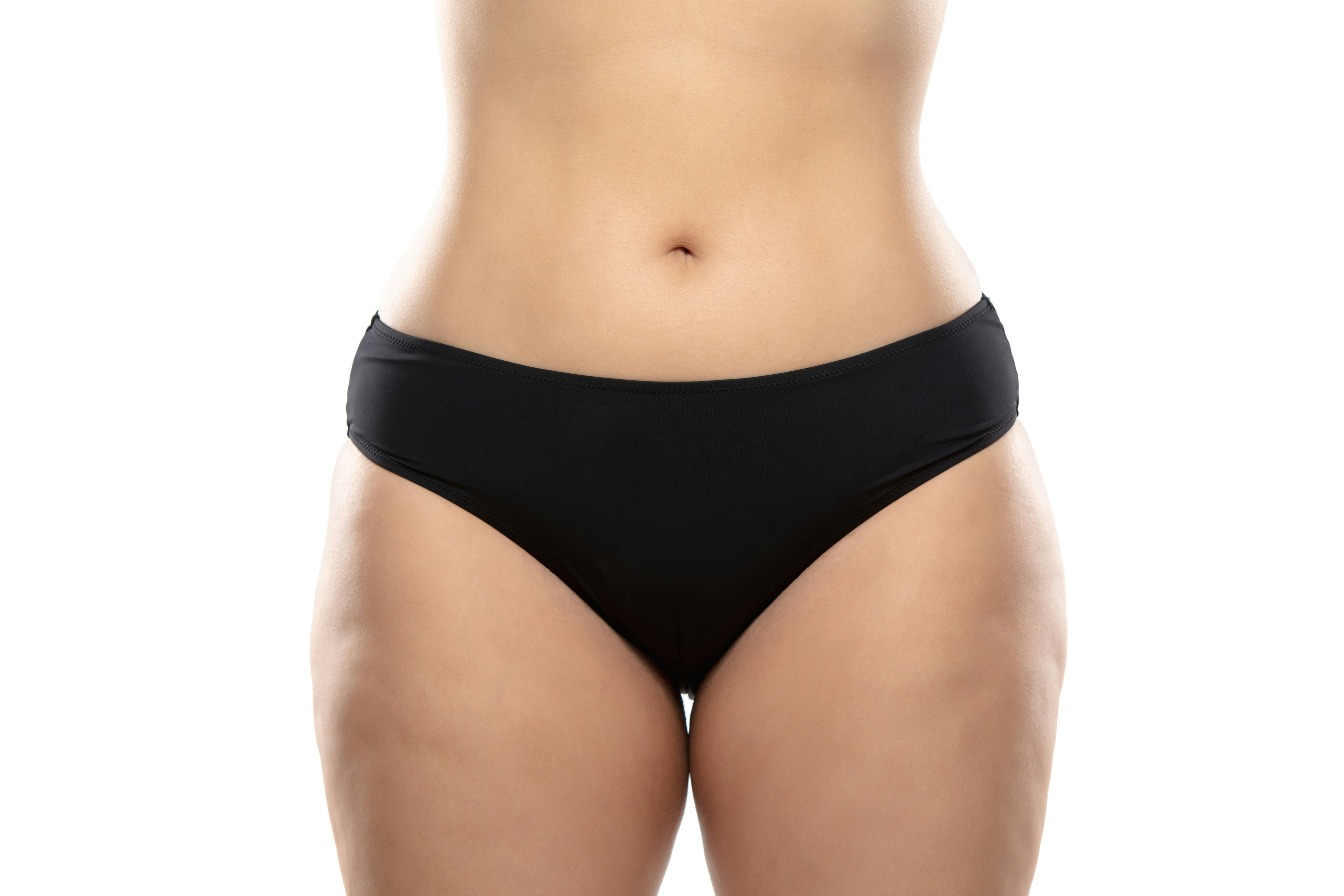
Estrogen naturally directs fat storage to the hips and thighs, especially during the reproductive years. During pregnancy, estrogen steers fat to form below the abdomen. Saddlebag fat is also more common in women because of the size of the pelvis.
Genetics and Fat Cell Distribution
Your genes help decide where your body prefers to store fat. The outer thighs often hold a higher concentration of fat cells, so this area can still look full even as your overall body fat drops. If you're genetically prone to storing fat here, saddlebags can be hard to shift even close to your ideal weight.
Sedentary Lifestyle
Sitting most of the day can contribute to thigh fat, because less activity slows circulation and makes it easier to eat more calories than you burn. Poor posture and back problems may also affect how fat settles in this area.
Age and Body Composition
As we age, metabolism slows down, making it easier to gain weight and store fat in the thighs. Eating more calories than your body needs also adds up, since extra calories are converted into fat.
PCOS and Menopause
Hormonal imbalances, especially in women, can change where the body stores fat. Polycystic ovary syndrome (PCOS), a hormonal condition, and menopause can both contribute to fat building up in the thighs. If you think either one might be playing a part, your doctor can help sort it out.
Lipedema
In rare cases, extra thigh fat comes from lipedema, an irregular buildup of fat that usually affects the arms and legs. It can make the lymphatic system, your body's fluid drainage network, sluggish. If you suspect lipedema, talk with your doctor first. AirSculpt® can treat lipedema when there's excess fat in the subcutaneous layer, the fat just under the skin, that needs to be removed.
Can Outer Thigh Workouts Reduce Outer Thigh Fat?
Outer thigh workouts build muscle and shape, and the fat itself comes off only through overall fat loss. To shrink saddlebags, you need to lower your overall body weight, and exercise then tones the muscles underneath.
Why Spot Reduction Doesn't Work
Spot reduction, the idea that exercising one area burns the fat sitting on it, is a myth. Stored fat gets broken down into free fatty acids and glycerol, which enter the bloodstream to be used for energy. During exercise, that fuel can come from anywhere in the body, so the fat you burn isn't pulled from the muscle you're working. Your genes largely decide where fat shows up when you gain weight and where it leaves when you lose it.
We cover the science in more depth in why targeted fat loss is so difficult.
What the Hip Abductors Actually Do
Your hip abductors are the muscles that move your leg out to the side, away from your body. Moves like banded side steps activate them and improve strength in the outer thighs. Strong muscles around the hips support hip stability and mobility.
Weak hips are linked to more knee pain, while hip-strengthening exercises are linked to less pain and injury. Training these muscles also builds a firmer foundation beneath the fat.
Best Outer Thigh Workouts
The best outer thigh workouts build muscle in your hips and thighs, which helps create shape and firmness over time. Move slowly, keep good form, and stop if anything hurts. If you have a joint issue or injury, check with your doctor before starting.
Side-Lying Leg Raises
Lie on your side with your legs stacked and straight. Slowly raise your top leg, pause, and lower it with control. This move isolates the outer hip and thigh muscles, which helps sculpt the saddlebag area.
Lateral Band Walks
Loop a resistance band just above your knees and bend slightly at the hips and knees. Take small steps to the side, keeping tension on the band. This move activates the hip abductors and builds strength in the outer thighs.
Curtsy Lunges
Stand tall, then step one foot behind and across the other, like a curtsy. Bend both knees, then press back up to standing and switch sides. For a similar side-to-side option, lateral lunges hit the outer thigh while working your glutes and core.
Clamshells
Lie on your side with your knees bent and your feet together. Keep your feet touching, lift your top knee toward the ceiling, then lower it slowly. A band just above your knees makes it harder once the basic version feels easy.
Hip Abduction Machine
Sit in the machine with the pads resting on the outside of your knees. Press your legs outward slowly, then let them come back together with control. Hip abduction exercises help develop the muscles around your hips and support hip stability.
Step-Ups
Step onto a sturdy box or bench with one foot and press through your heel to lift your body. Lower yourself with control and repeat on the other leg. Step-ups target the entire thigh, especially when you add weights.
Fire Hydrants
Start on your hands and knees with your back flat. Keep your knee bent, lift one leg out to the side, then lower it. Fire hydrants help build the muscles that support hip stability and mobility.
Side Planks with Leg Lift
Hold a side plank on your forearm with your body in a straight line from head to feet. Lift your top leg a few inches, then lower it without letting your hips drop. If a full side plank feels like too much, rest your bottom knee on the floor.
How to Build These Into a Weekly Routine
A balanced week pairs outer thigh moves with full-body strength training and regular cardio. For cardio, aim for at least 30 minutes, at least three times a week.
Here's one sample week you can adjust to your schedule:
- Monday: full-body strength training plus 3 or 4 outer thigh moves
- Tuesday: 30 minutes or more of cardio, like brisk walking, biking, or swimming
- Wednesday: rest or an easy walk
- Thursday: full-body strength training plus 3 or 4 different outer thigh moves
- Friday: 30 minutes or more of cardio
- Saturday: an active day, like a hike, a bike ride, or dancing
- Sunday: rest
Rotate the eight exercises above so each one gets a turn across the week.
Lifestyle Changes That Support Fat Loss
To lose fat, you have to burn more calories than you eat, which is called a calorie deficit. Eating about 500 fewer calories a day adds up to 3,500 a week, which equals roughly a pound of fat.
A few habits make that deficit easier to keep:
- Eat more protein. Protein supports muscle recovery and helps you feel full.
- Keep carbs moderate. Whole grains, vegetables, and fruit can keep your energy up without spiking blood sugar.
- Cut back on processed food. Processed food is associated with accumulating excess fat.
- Drink more water. Staying hydrated and skipping sugary drinks supports your goals.
- Protect your sleep. Poor sleep can affect hormones, slow your metabolism, and cause cravings.
For more ideas, see our guide on how to get rid of outer thigh fat.
How Long Does It Take to See Results in the Outer Thighs?
Fat loss is gradual, and the thighs are usually among the last places to slim down. Losing a significant amount of thigh fat in two weeks generally isn't realistic. Early changes often come from less bloating or a temporary muscle pump rather than true fat loss.
Stubborn areas tend to be the last to shrink, and small pockets of pinchable fat are entirely normal. The good news is that muscle tone can make your legs look firmer even before fat is fully reduced. Timelines vary from person to person, so steady habits matter more than a deadline.
When Exercise Isn't Enough
If you're eating well, training consistently, and still dealing with saddlebags, you're not doing anything wrong. Fat cells in this area tend to resist breakdown, so some volume may remain even after they shrink as much as they can.
Liposuction procedures can treat outer thigh saddlebags, along with the inner thighs and the banana roll under the buttocks. Pinchable fat on the outer thighs points toward fat removal, while loose skin without pinchable fat is better suited to a lift. The right option depends on your body, your skin, and your goals, so talking with a surgeon is the best next step.
How Outer Thigh AirSculpt® Works
Outer Thigh AirSculpt® treats fat on the hips and thighs, and it's an alternative to traditional liposuction. It's minimally invasive, with no scalpel, no stitches, and no general anesthesia. Our patented technique removes fat cell by cell through a two-millimeter entry point that leaves a freckle-sized mark.

We create each opening with a biopsy punch, a small tool that makes a round two-millimeter opening. For the outer thighs, we use six entry points: one near the pelvis on each side, one mid-thigh on each side, and one under each buttock. You can stay fully awake while your saddlebag fat is removed. Think of it like plucking grapes off a vine, gently and with care.
For comparison, traditional liposuction uses a cannula, a thin hollow tube, inserted through small incisions to suction out fat. It's usually done under general anesthesia, and the incisions are generally closed with a stitch.
What is recovery like?
Downtime after Outer Thigh AirSculpt is typically 24 to 48 hours. Bruising, swelling, and some pain are possible after AirSculpt. Bruising can range from none to black and blue and usually fades within 2 to 3 weeks. Walking is part of healing, and you'll be asked to walk at least 30 minutes a day in the first couple of days after treatment.
You'll need to hold off on strenuous activity for at least two weeks while you heal, and serious running should wait 2 to 3 weeks. You can typically remove your compression garment at three weeks. Before treatment, you'll avoid tobacco, alcohol, fish oil, flax seed, and omega-3 pills for one week before and one week after. Your surgeon will give you personal recovery instructions, so follow those first.
Are the results permanent?
The fat cells we remove are gone permanently. If you gain weight later, new fat tends to show up in untreated areas instead. Results should be fully complete by about six months and will stay permanent as long as your weight stays stable. Before any procedure, your surgeon screens you medically and talks through what can realistically be achieved for your body.
Outer Thigh Workout FAQs
Can you spot-reduce fat on the outer thighs?
You can't spot-reduce fat on the outer thighs, because the fat your body burns during exercise can come from anywhere in the body. Outer thigh workouts still build muscle and shape in the hips and thighs. Lowering your overall body weight through diet and exercise is what shrinks saddlebags over time. If stubborn fat stays after steady effort, a surgeon can walk you through your options.
What causes saddlebags to form?
Saddlebags usually form because estrogen and genetics steer fat toward the hips and thighs, especially in women. Saddlebag fat is also more common in women because of the size of the pelvis. A sedentary lifestyle, aging, and hormonal shifts like PCOS or menopause can add to it. In rare cases, a condition called lipedema is involved, so check with your doctor if you have concerns.
Which exercises best target the outer thighs?
Side-lying leg raises, lateral band walks, and step-ups are some of the most useful moves for building muscle in the outer thighs. Fire hydrants and hip abduction exercises help develop the muscles that support hip stability and mobility. Full-body strength training helps reduce fat all over and sculpts your thighs in the process. Pair these moves with regular cardio and a calorie deficit, since fat loss happens across the whole body.
Ready to Talk to a Specialist?
If you've been putting in steady work and your outer thighs still won't change, it can help to talk with someone who looks at this every day. A surgeon can help you figure out whether your concern is pinchable fat, loose skin, or both, and what can realistically be achieved. Your candidacy for Outer Thigh AirSculpt is confirmed during a free consultation.
Book a Free Consultation or Get My Custom Outer Thigh Contouring Plan.